
The Future of Pharmaceutical Procurement in Nigeria
Why the Way Pharmacies Buy Medicines Is Changing

Abdulwahab Olúfọlábòmí Sanuth
12th march, 2026
PharmaceuticalSupply ChainNigeriaDigital Health
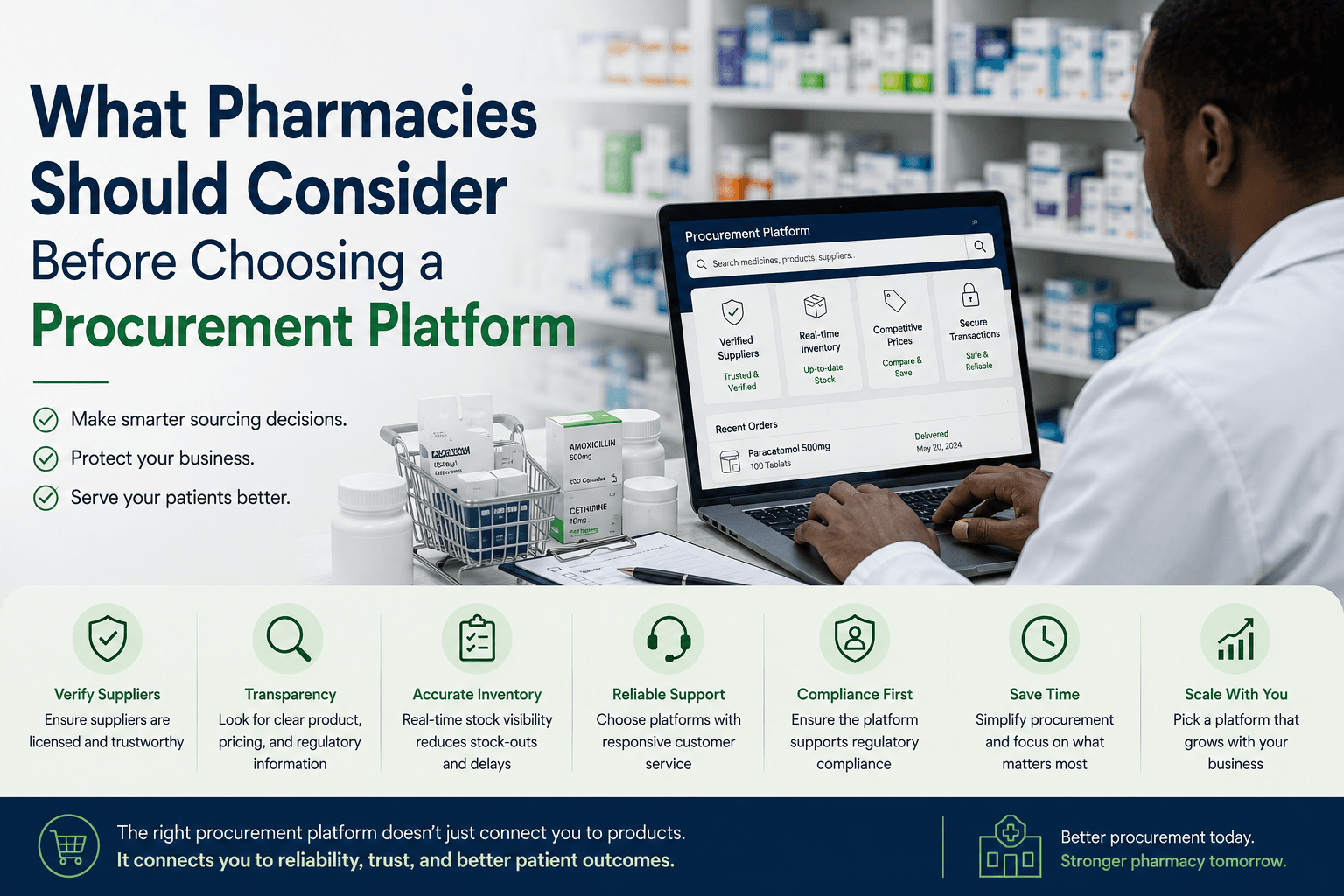
Not every procurement platform is built the same. Here are the key questions every pharmacy should ask before deciding where to source medicines.
The pharmaceutical industry is becoming increasingly digital.
Across Nigeria, more pharmacies are exploring digital procurement platforms to source medicines, compare prices, and manage supplier relationships. The promise is compelling: faster procurement, wider product selection, and greater operational efficiency.
Yet not every procurement platform is built the same.
Choosing the wrong platform can introduce new risks, from delayed deliveries and inaccurate inventory to counterfeit products and poor customer support. Choosing the right one, on the other hand, can strengthen daily operations, improve inventory planning, and build long-term business resilience.
Before deciding where to procure medicines, here are some key questions every pharmacy should ask.
A procurement platform is only as trustworthy as the businesses selling through it.
Before placing an order, pharmacies should understand how suppliers are vetted.
Consider asking:
Supplier verification is particularly important in Nigeria's pharmaceutical market. According to NAFDAC, falsified and substandard medicines remain an ongoing challenge despite significant regulatory progress, making supplier credibility a critical part of procurement decisions. (Think Global Health)
"Once trust is broken concerning counterfeit drugs, it is nearly impossible to regain it."Why Trust Is the Real Currency in Pharmaceutical Procurement
A good procurement platform should help pharmacies make informed purchasing decisions.
Look for visibility into:
The more transparent a platform is, the easier it becomes to reduce procurement uncertainty and improve purchasing confidence.
"In digital procurement, trust must be supported by transparency."Why Trust Matters More Than Price in Pharmaceutical Procurement
Few experiences are more frustrating than ordering a product only to discover it is unavailable.
Real-time or regularly updated stock visibility helps pharmacies:
Accurate inventory information also strengthens trust between buyers and suppliers.
No procurement system is immune from problems.
Orders may be delayed.
Products may arrive damaged.
Mistakes can happen.
The important question is how the platform responds.
Before choosing a platform, understand:
A procurement platform should provide confidence not only before a purchase, but also after one.
Technology should simplify work — not add more of it.
An effective procurement platform should reduce the number of phone calls, WhatsApp messages, supplier visits, and manual follow-ups required to complete an order.
Useful features may include:
The goal is to spend less time sourcing medicines and more time serving patients.
Pharmacies operate within a highly regulated environment.
A procurement platform should support — not complicate — regulatory compliance.
Look for systems that encourage:
Research involving Nigerian pharmacists found that 98.4% believe stronger enforcement of drug laws is essential to controlling counterfeit medicines, while 95.3% support stricter regulation of online pharmaceutical commerce. These findings highlight the importance of choosing platforms that take compliance seriously. (PMC)
The procurement needs of a single independent pharmacy differ from those of a growing pharmacy chain or wholesale distributor.
Consider whether the platform can continue supporting your business as it expands.
Ask questions such as:
A platform should be a long-term operational partner, not just a short-term procurement tool.
Nigeria's pharmaceutical supply chain continues to evolve, but it also faces structural challenges. Pharmaceutical imports were estimated at US$1.56 billion in 2020, while fragmented procurement systems, counterfeit medicines, and inefficient distribution remain significant concerns across the industry. (Nigeria Health Watch)
Digital procurement platforms have the potential to improve visibility, strengthen supplier relationships, and simplify operations — but only when they are built on trust, transparency, and compliance.
The right platform should do more than connect buyers and sellers.
It should help pharmacies make better purchasing decisions, reduce operational risks, and spend less time managing procurement so they can spend more time caring for the communities they serve.
Ultimately, choosing a procurement platform is not simply a technology decision.
It is a business decision.
And in healthcare, it is also a patient safety decision.
The questions outlined above are not simply a checklist for evaluating procurement platforms. They reflect the operational realities that pharmacies face every day — maintaining product availability, managing supplier relationships, ensuring regulatory compliance, protecting patients, and running a sustainable business.
As digital procurement continues to evolve, platforms that prioritize transparency, supplier verification, accurate product information, and operational efficiency will be better positioned to support pharmacies over the long term.
These are the principles guiding the development of Medicare Supply Chain (MSC).
MSC is being built around the needs identified through extensive engagement with pharmacies across Lagos, with a focus on simplifying procurement while strengthening trust throughout the pharmaceutical supply chain. From verified distributors and improved product visibility to streamlined reordering and consumer protection frameworks, the platform is designed to address the operational challenges pharmacies identified as most important.
Technology alone cannot solve every procurement challenge. Strong inventory management, sound financial practices, and effective business operations will always remain essential.
However, when combined with a trusted procurement platform that promotes transparency, compliance, and efficiency, pharmacies are better equipped to make informed purchasing decisions, strengthen supplier relationships, and continue delivering quality care to the communities they serve.
The latest industry news, interviews, technologies, and resources.
View All PostsWhy the Way Pharmacies Buy Medicines Is Changing
12th march, 2026

Why many pharmacies spend more time sourcing medicines than serving patients

13th march, 2026
Stay on top of what's moving in pharma and industrial supply across West Africa.